Fenquravix
Loom Series
Loom Series
Couldn't load pickup availability
1. Problem Statement
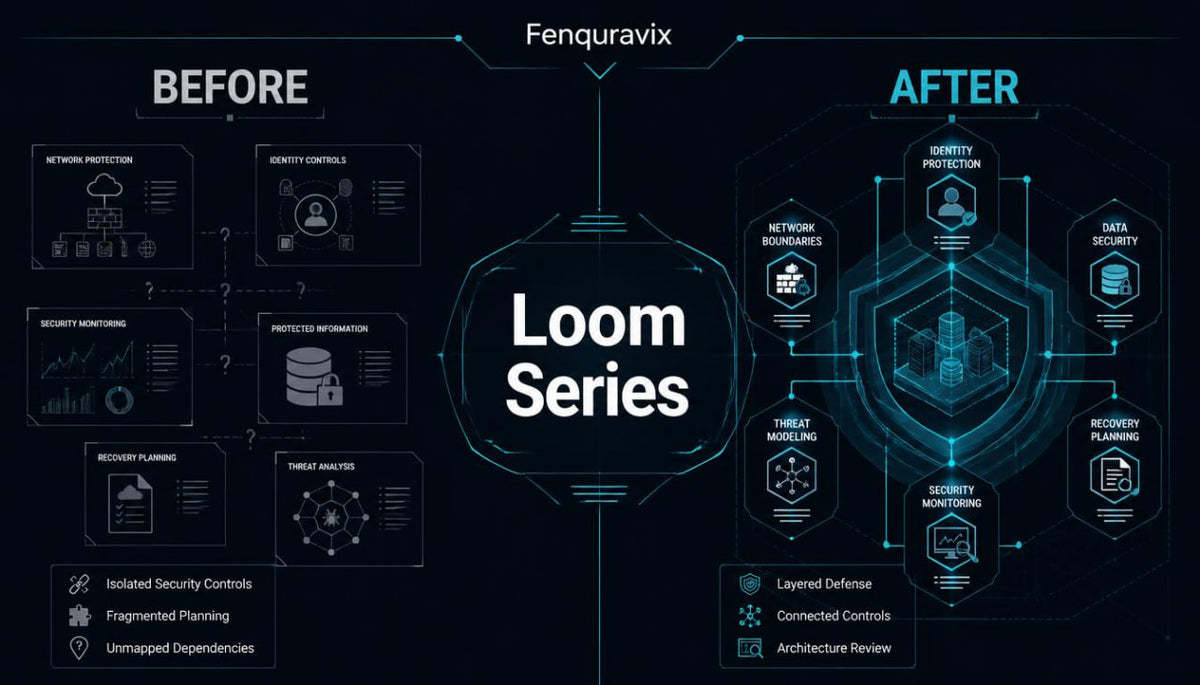
Digital environments often contain multiple security controls that operate independently without a clearly documented relationship between them. Understanding individual technologies and defensive practices does not automatically explain how they should be organized within a broader security architecture. Learners may find it challenging to evaluate the relationships between network boundaries, identity controls, monitoring arrangements, information protection, and incident-response procedures. When protective measures are planned separately, inconsistencies and overlooked dependencies can complicate defensive analysis. Studying integrated security architecture provides a structured way to examine how different safeguards contribute to the protection of connected digital resources.
2. Solution
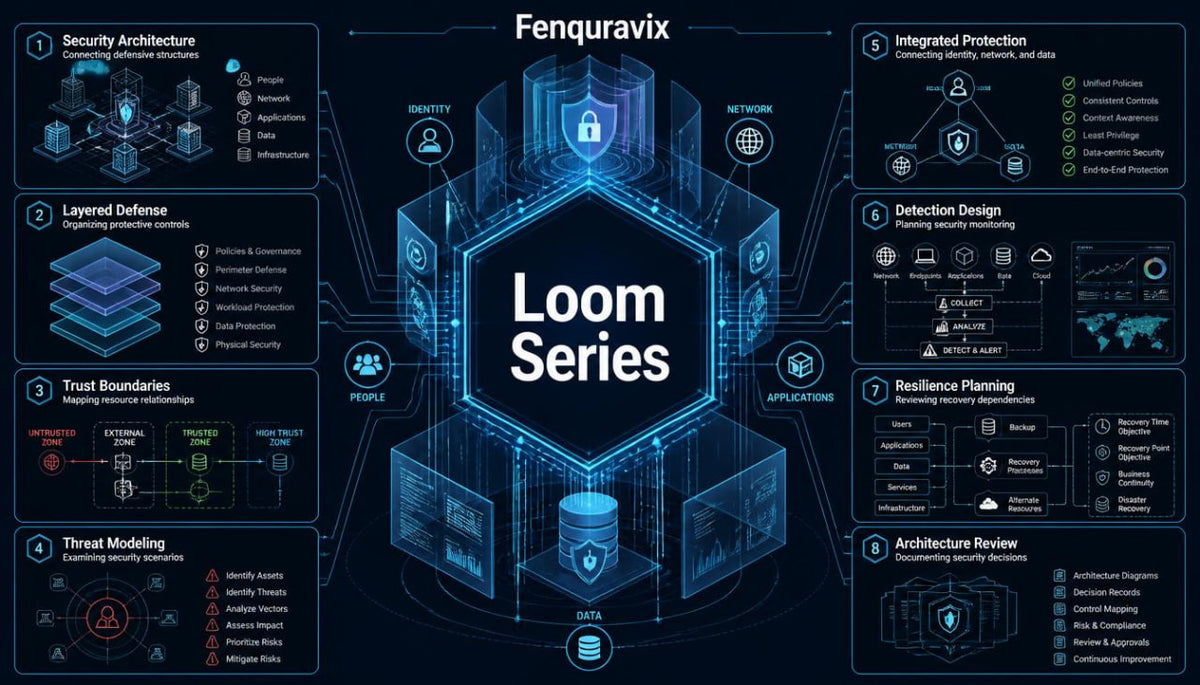
Loom Series introduces cybersecurity architecture through a coordinated approach to threat modeling, defensive design, and security-control evaluation. The course explains how different protective measures can be organized according to information sensitivity, operational responsibilities, and documented security requirements. Detailed fictional scenarios demonstrate the relationships between network structures, identity arrangements, monitoring practices, and incident-handling procedures. Guided exercises encourage learners to prepare architectural diagrams, examine trust boundaries, evaluate defensive controls, and document technical decisions. The materials emphasize structured security reasoning, responsible design practices, and the development of coherent defensive recommendations.
3. What's Inside
Module 01 — The Architecture Behind Digital Defense
Security architecture provides a structured description of how protective measures relate to digital resources and operational requirements.
This module introduces architectural thinking and examines why individual security measures should be evaluated within the environments where they operate.
Learners study how information, identities, communication pathways, and technical safeguards form interconnected security structures.
Topics covered:
-
Security architecture fundamentals.
-
Relationships between digital resources.
-
Architectural documentation.
-
Security requirements.
-
Defensive design principles.
-
Technical and organizational boundaries.
-
Evaluating existing protective arrangements.
Practical exercise: Examine a fictional organization's digital environment and prepare an architectural overview identifying resources, communication relationships, and existing defensive measures.
Module 02 — Defense in Depth: Building Protective Layers
A single protective control may address a particular security concern without covering every possible weakness.
This module examines defense in depth, an architectural approach that combines different types of safeguards.
Learners explore preventive, detective, and corrective controls and examine how they can complement one another.
The materials explain the relationship between network restrictions, identity verification, information protection, monitoring, and recovery planning.
Topics covered:
-
Layered security principles.
-
Preventive defensive measures.
-
Detection and observation.
-
Corrective security procedures.
-
Control dependencies.
-
Evaluating overlapping safeguards.
Practical exercise: Design a conceptual layered defense model for a fictional organization and explain the purpose of each protective measure.
Module 03 — Mapping Trust Boundaries
Digital environments contain areas where information moves between different responsibilities, components, and levels of trust.
This module introduces trust-boundary analysis and examines how communication between separated resources can introduce security considerations.
Learners study data-flow diagrams, communication interfaces, resource relationships, and authorization requirements.
The materials explain how trust boundaries support architectural analysis and help identify areas requiring additional protective review.
Practical exercise: Create a data-flow diagram for a fictional document-management environment, identifying trust boundaries and communication relationships.
Module 04 — Threat Modeling Across Connected Resources
Threat modeling provides an organized method for examining how security concerns may affect digital resources.
This module develops the introductory threat-modeling concepts introduced in earlier Fenquravix courses.
Learners examine asset identification, information movement, vulnerable components, possible threat scenarios, and the defensive significance of architectural decisions.
The course emphasizes documenting assumptions, defining review boundaries, and connecting observations with relevant protective recommendations.
Topics covered:
-
Threat-modeling objectives.
-
Identifying relevant resources.
-
Data-flow examination.
-
Trust-boundary evaluation.
-
Threat scenario documentation.
-
Security-control mapping.
-
Reviewing architectural weaknesses.
Practical exercise: Prepare a conceptual threat model for a fictional information-sharing environment, including diagrams, identified concerns, and defensive considerations.
Module 05 — Connecting Identity, Network & Data Protection
Security architecture requires an understanding of how different defensive disciplines interact.
This module examines the relationships between identity management, network separation, and information-security controls.
Learners consider how authorization policies influence communication pathways and how information classification can guide defensive design decisions.
The materials also examine situations where inconsistent settings across different components create unnecessary security exposure.
Practical exercise: Evaluate a fictional organization containing multiple departments, shared information resources, and inconsistent permission arrangements.
Prepare recommendations describing how identity, communication, and information-handling controls could be coordinated.
Module 06 — Detection Within the Architecture
Monitoring arrangements contribute information about activity taking place across connected resources.
This module examines how event collection, monitoring responsibilities, alert evaluation, and incident documentation can be incorporated into architectural planning.
Learners study the relationship between monitoring objectives and the technical environment being examined.
The materials explain why different components may generate different categories of security observations.
Topics covered:
-
Monitoring architecture.
-
Event source identification.
-
Activity record relationships.
-
Detection coverage.
-
Alert classification.
-
Monitoring documentation.
-
Incident-reporting pathways.
Practical exercise: Develop a conceptual monitoring architecture for a fictional organization, identifying relevant event sources and documentation responsibilities.
Module 07 — Resilience and Recovery by Design
Security architecture also involves preparing for operational interruptions and unexpected events.
This module introduces resilience planning and examines how resource dependencies, information handling, and recovery procedures influence defensive design.
Learners explore the relationship between backup arrangements, continuity requirements, recovery documentation, and resource restoration.
The course discusses how architectural decisions can affect the ability to investigate incidents and restore affected services.
Practical exercise: Prepare a conceptual recovery dependency map for a fictional organization, identifying critical resources and their relationships.
Module 08 — Reviewing and Improving Security Architecture
Digital environments change as resources, responsibilities, and operational requirements develop.
This module examines how architectural documentation can support periodic security reviews.
Learners study change assessment, configuration documentation, control evaluation, and the identification of inconsistencies between established requirements and observed arrangements.
The materials introduce methods for organizing architectural findings and preparing review recommendations.
Practical exercise: Examine a fictional architectural change proposal and document its possible effects on communication boundaries, information protection, monitoring, and recovery planning.
Module 09 — Communicating Architectural Decisions
Security planning requires technical decisions to be explained clearly to the people responsible for reviewing and maintaining digital environments.
This module examines the structure of architectural decision records and defensive planning reports.
Learners study how to describe requirements, observations, design alternatives, supporting reasoning, and unresolved questions.
The course also discusses how diagrams and written explanations can complement one another within technical documentation.
Practical exercise: Prepare an architectural decision record for a fictional security-control change, explaining the proposed arrangement and the reasoning behind it.
Final Workshop — The Connected Defense Architecture
The concluding workshop combines threat modeling, layered protection, monitoring architecture, and defensive documentation.
Learners receive a fictional organizational scenario containing shared information resources, departmental network areas, multiple identity categories, and several documented security concerns.
Workshop activities include:
-
Reviewing the organizational environment.
-
Identifying critical digital resources.
-
Preparing an architectural overview.
-
Mapping communication and trust boundaries.
-
Developing a conceptual threat model.
-
Evaluating existing protective controls.
-
Designing a layered defensive structure.
-
Documenting monitoring and incident-response considerations.
-
Examining recovery dependencies.
-
Preparing an architectural review report.
The final assignment combines diagrams, technical observations, defensive recommendations, and documented design decisions into a unified security architecture proposal.
All activities use fictional information and are intended for authorized educational study.
4. Who Is This For?
Loom Series is intended for learners who want to examine how individual cybersecurity disciplines connect within a broader defensive architecture.
The course may be suitable for individuals who have already studied cybersecurity foundations, network defense, vulnerability assessment, security monitoring, and incident response.
It is particularly relevant to students interested in security design, architectural documentation, threat modeling, and coordinated defensive planning.
Previous familiarity with security controls, network structures, identity management, and incident-handling principles is recommended.
Learners should be comfortable examining technical diagrams, comparing defensive measures, and preparing written security observations.
The course concentrates on conceptual architecture, analytical exercises, and structured documentation rather than intrusive technical testing.
5. What You'll Learn
Throughout Loom Series, learners will explore how to:
- Explain foundational cybersecurity architecture principles.
- Identify relationships between digital resources and protective measures.
- Describe defense-in-depth strategies.
- Distinguish preventive, detective, and corrective controls.
- Interpret architectural security diagrams.
- Identify communication and trust boundaries.
- Prepare conceptual data-flow diagrams.
- Apply structured threat-modeling methods.
- Examine architectural weaknesses within fictional environments.
- Connect identity management with network-security arrangements.
- Evaluate the relationship between information classification and protective controls.
- Identify dependencies between security measures.
- Explain the role of monitoring within defensive architecture.
- Prepare conceptual detection and reporting structures.
- Analyze resilience and recovery dependencies.
- Evaluate the effects of architectural changes.
- Document security requirements and design considerations.
- Compare defensive arrangements using clearly defined criteria.
- Prepare architectural decision records.
- Develop a coordinated security architecture proposal.
- Communicate technical findings through structured documentation.
- Apply responsible defensive reasoning within authorized educational scenarios.
6. Refund Information — 30-Day Policy
30-Day Refund Requests
Learners may submit refund requests within 30 days of purchase, subject to the eligibility requirements stated in the Fenquravix Refund Policy.
To submit a request, learners should contact the Fenquravix support team through the published contact details and provide their relevant order information.
Refund eligibility, assessment, and processing follow the published policy conditions and applicable consumer rights, including any provisions concerning digital educational materials.
Self-paced learning overview
- ⬇️ Digital file available after purchase
- ♾️ Long-term availability
- 🛡️ Secure checkout
- 🔄 Content updated in 2026
1. How are Fenquravix courses organized?
1. How are Fenquravix courses organized?
Each course follows a structured learning format with clearly defined topics, educational explanations, practical examples, and review activities. The materials are arranged to help learners study individual cybersecurity concepts and understand how they relate to broader digital security practices.
2. Do I need previous cybersecurity knowledge?
2. Do I need previous cybersecurity knowledge?
The recommended starting knowledge depends on the selected course. Introductory materials focus on foundational concepts, while subsequent courses examine more detailed technical subjects. Learners can review each course description to identify a suitable starting point.
3. Can I study the materials at my own pace?
3. Can I study the materials at my own pace?
Fenquravix courses are designed for independent study. Learners can read explanations, examine examples, revisit individual topics, and work through exercises according to their own study schedule.
Share